



How do we deal with the Nazi past today? The exhibition at the Vorarlberg Museum Austria shows how thoroughly art and culture were a platform for ideology as a means of spell-binding the population – and how much of it worked on after 1945. Historically burdened objects from the museum and public spaces reveal previously little-noticed aspects of local history.
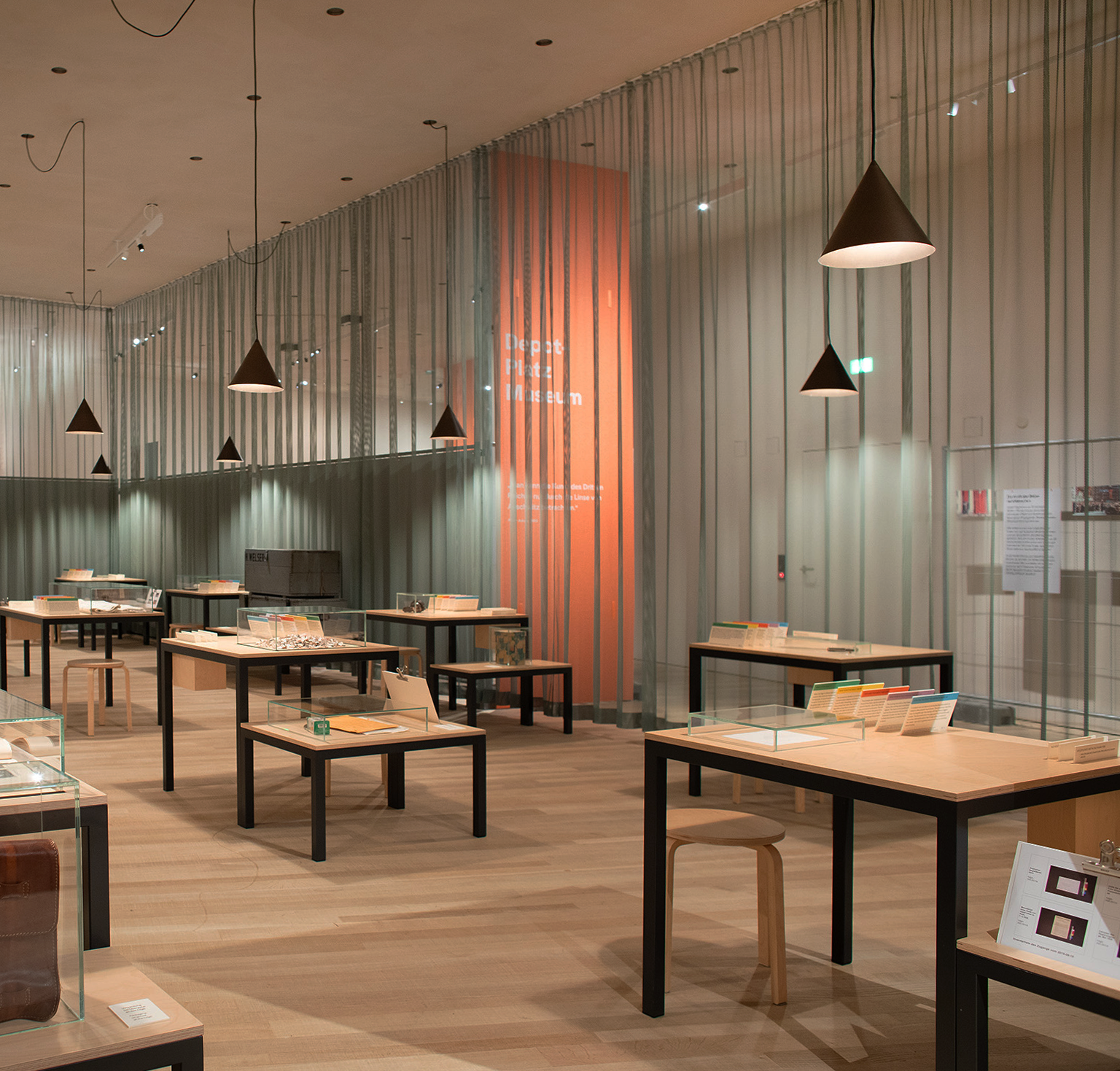
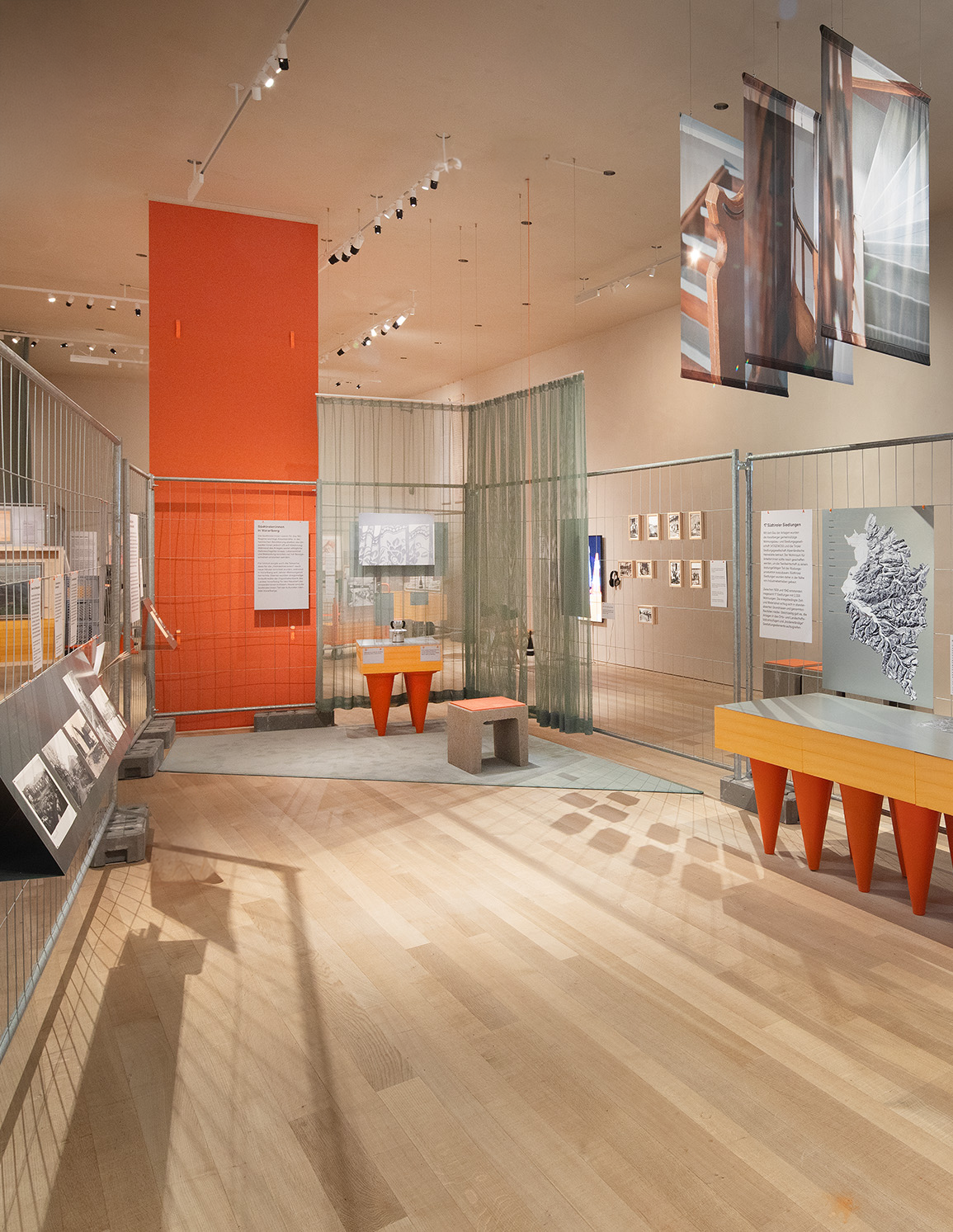
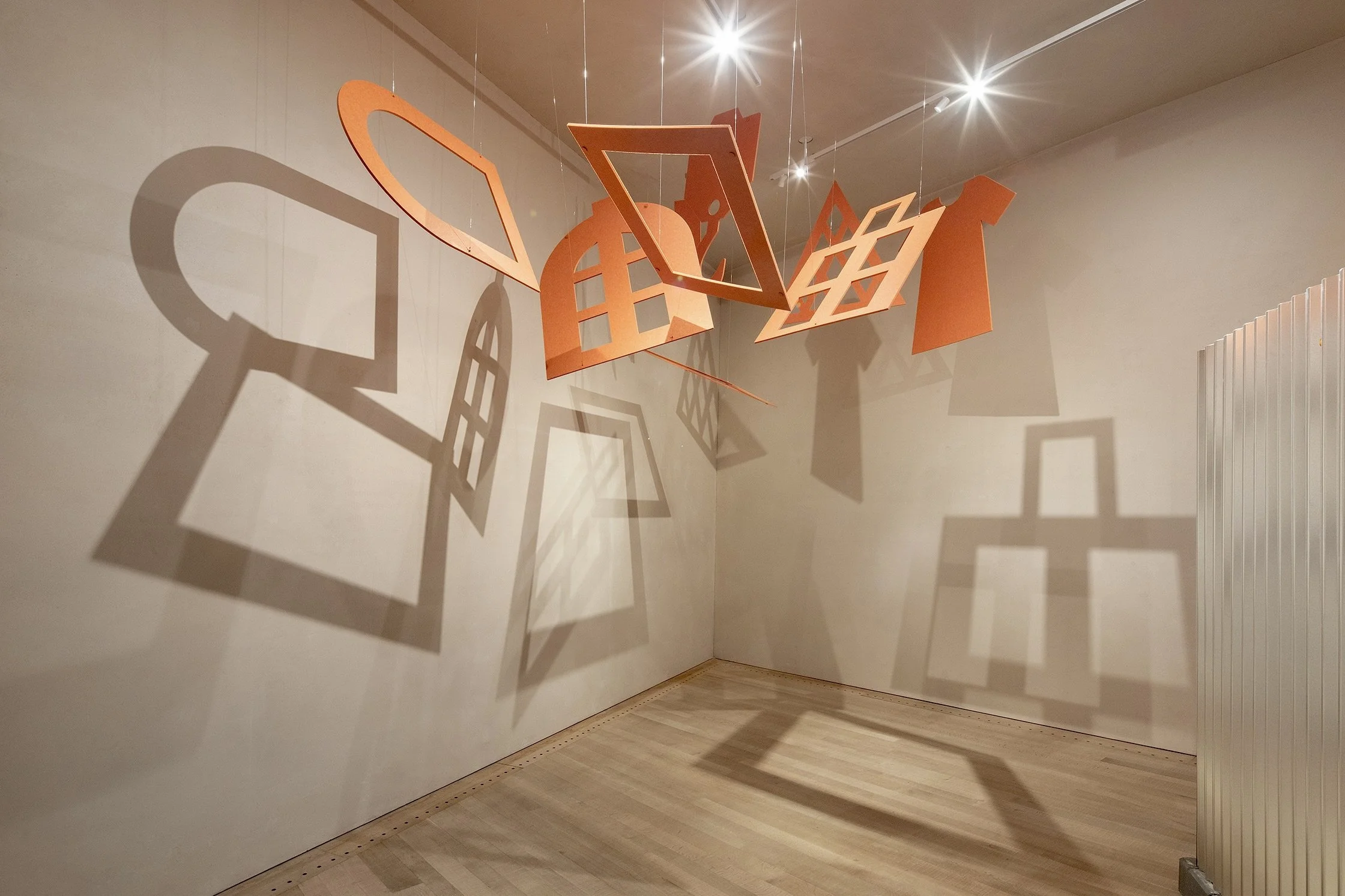
The exhibition addresses the “continuities after 1945” right from the introduction: objects drawn from the three central thematic strands of the exhibition hover above the visitors, casting elongated shadows across the floor and walls. This spatial configuration operates affectively, engaging visitors on both an emotional and sensory level, while simultaneously establishing the conceptual and atmospheric framework of the exhibition.
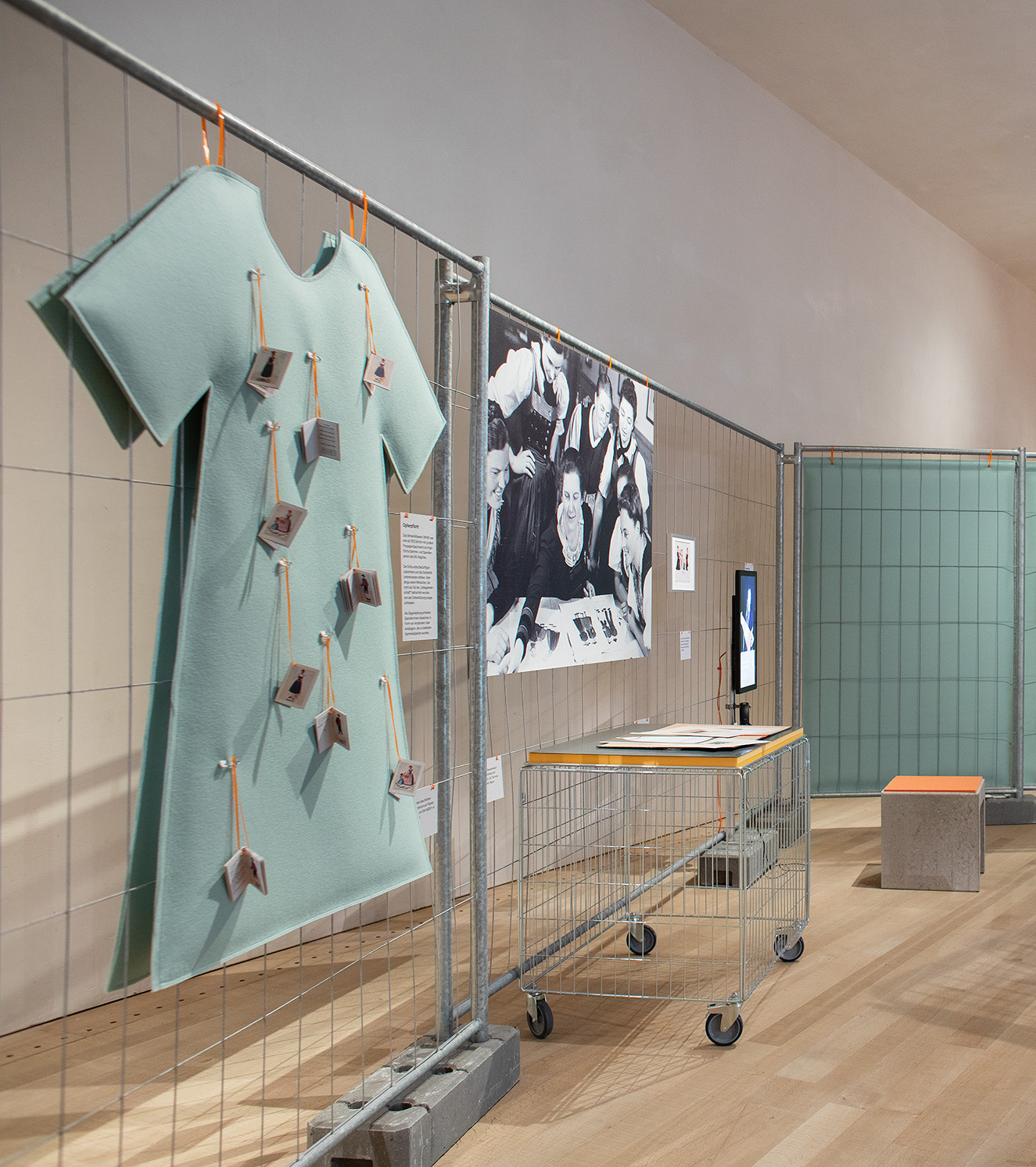
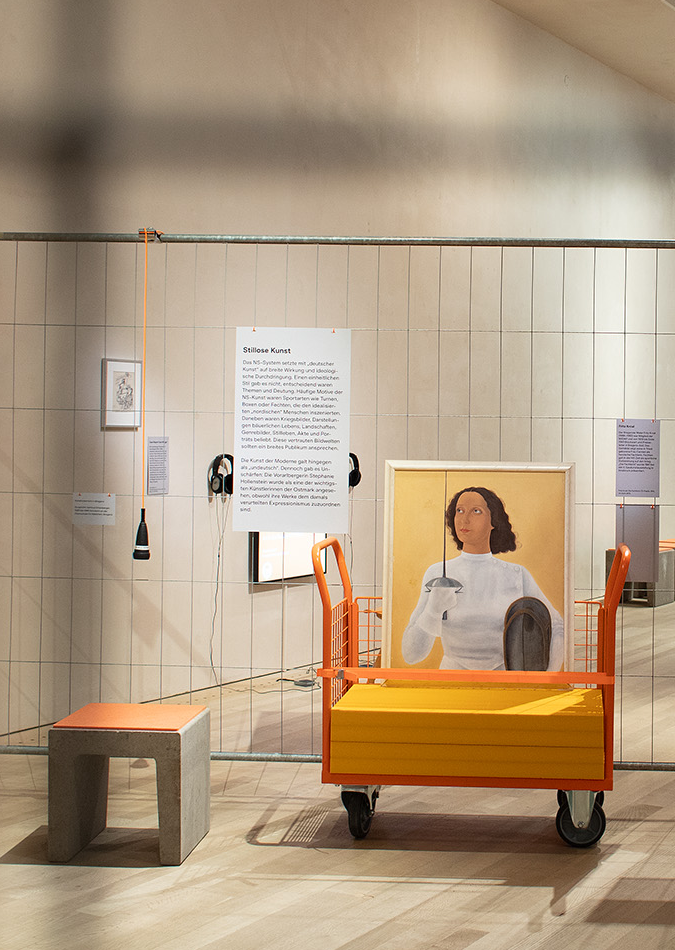
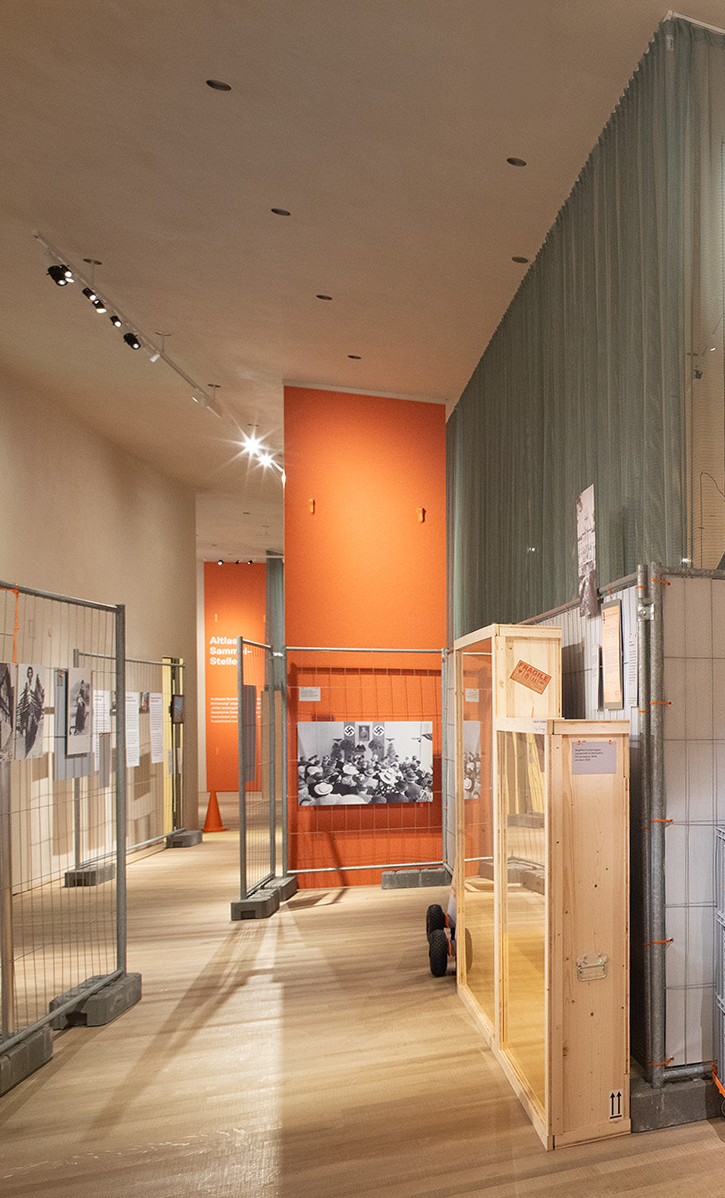
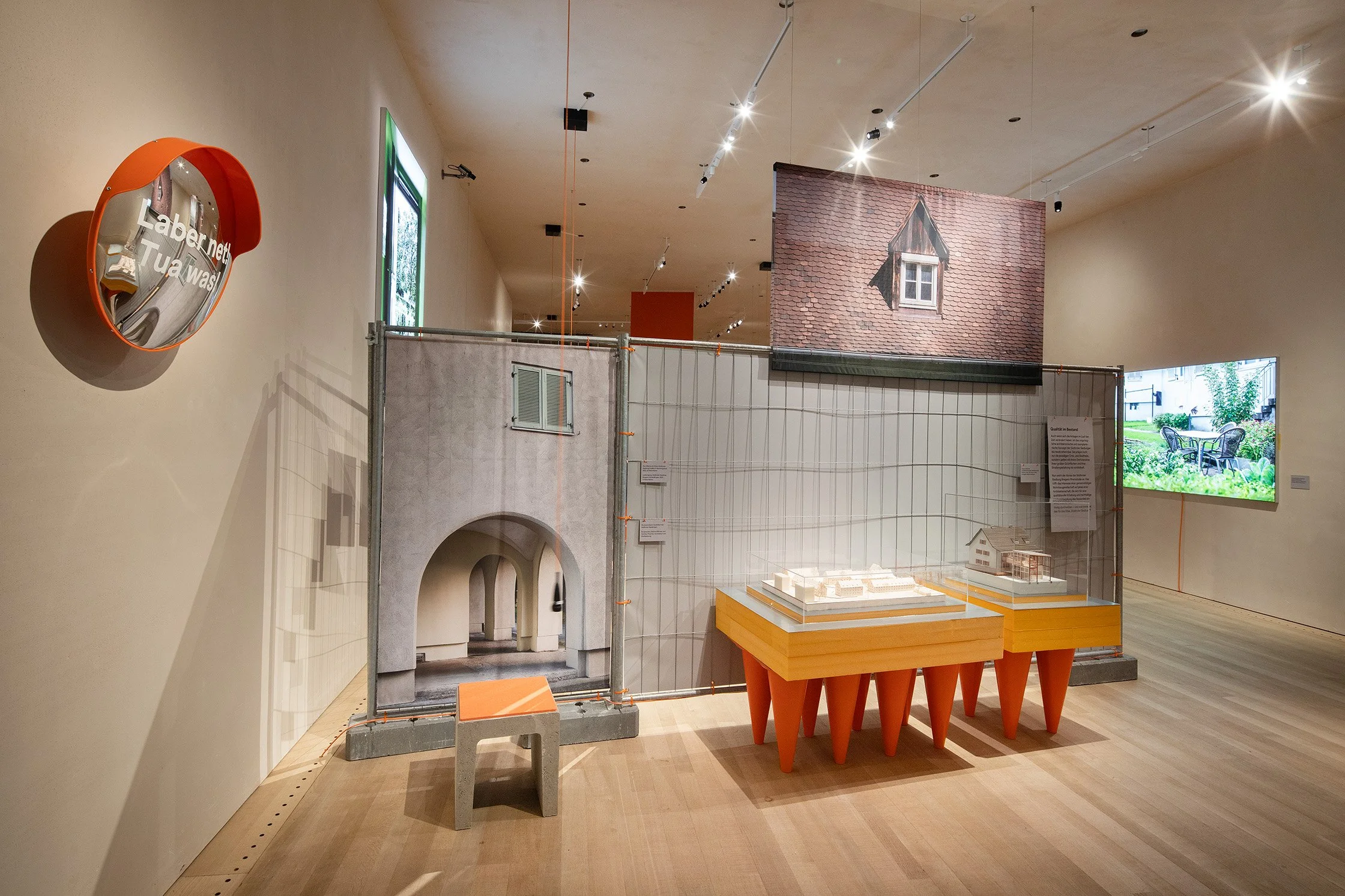
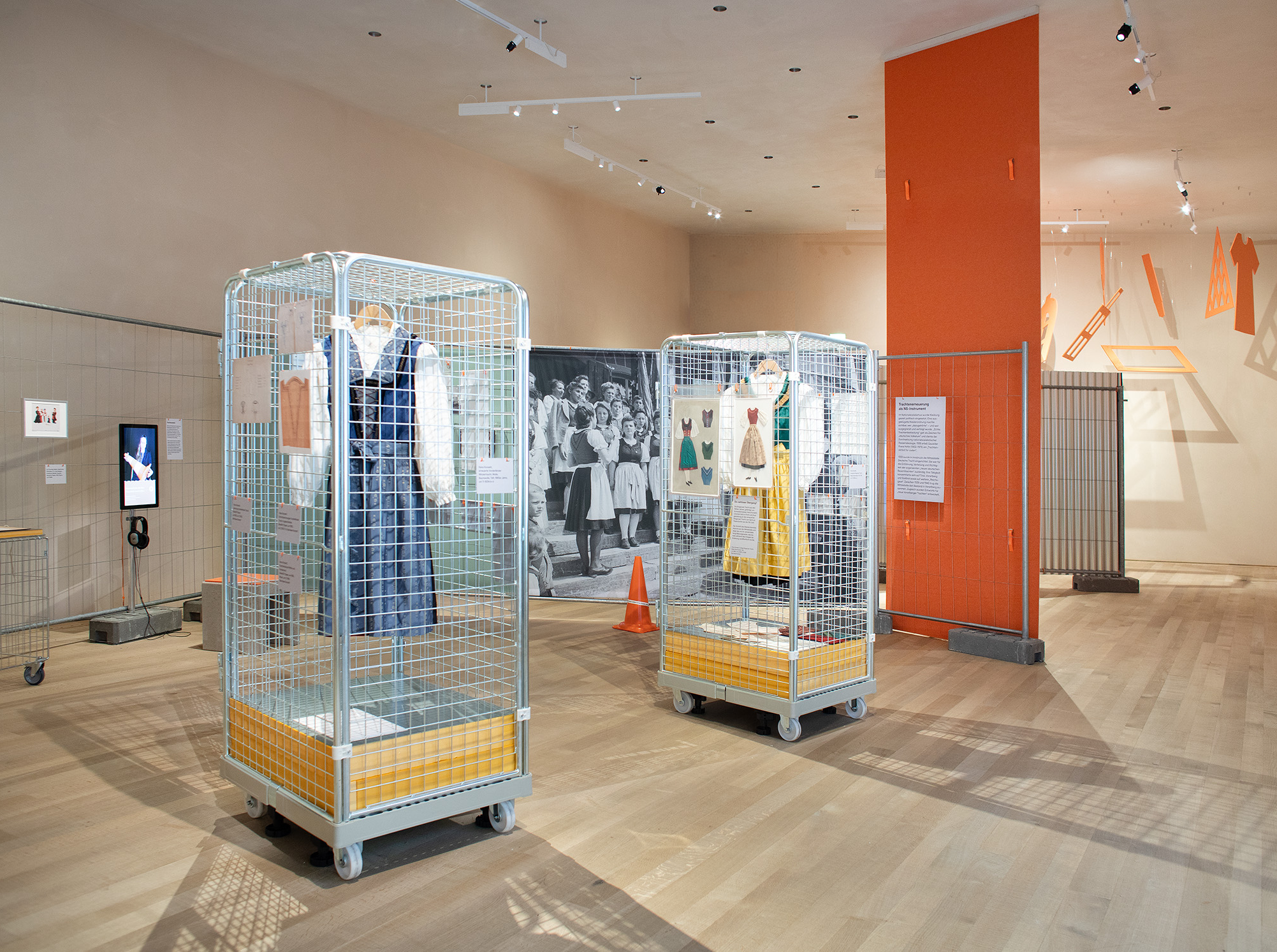
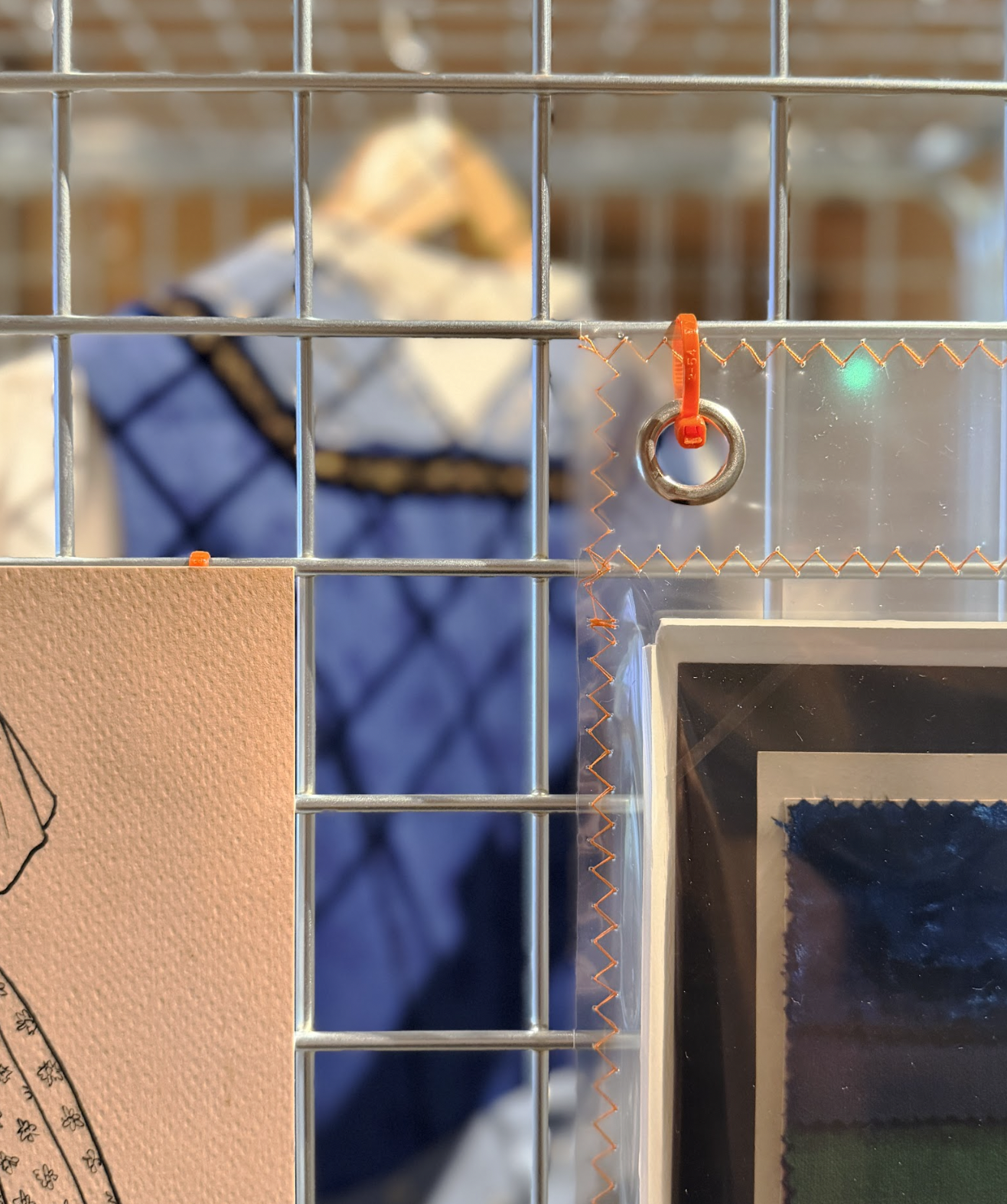
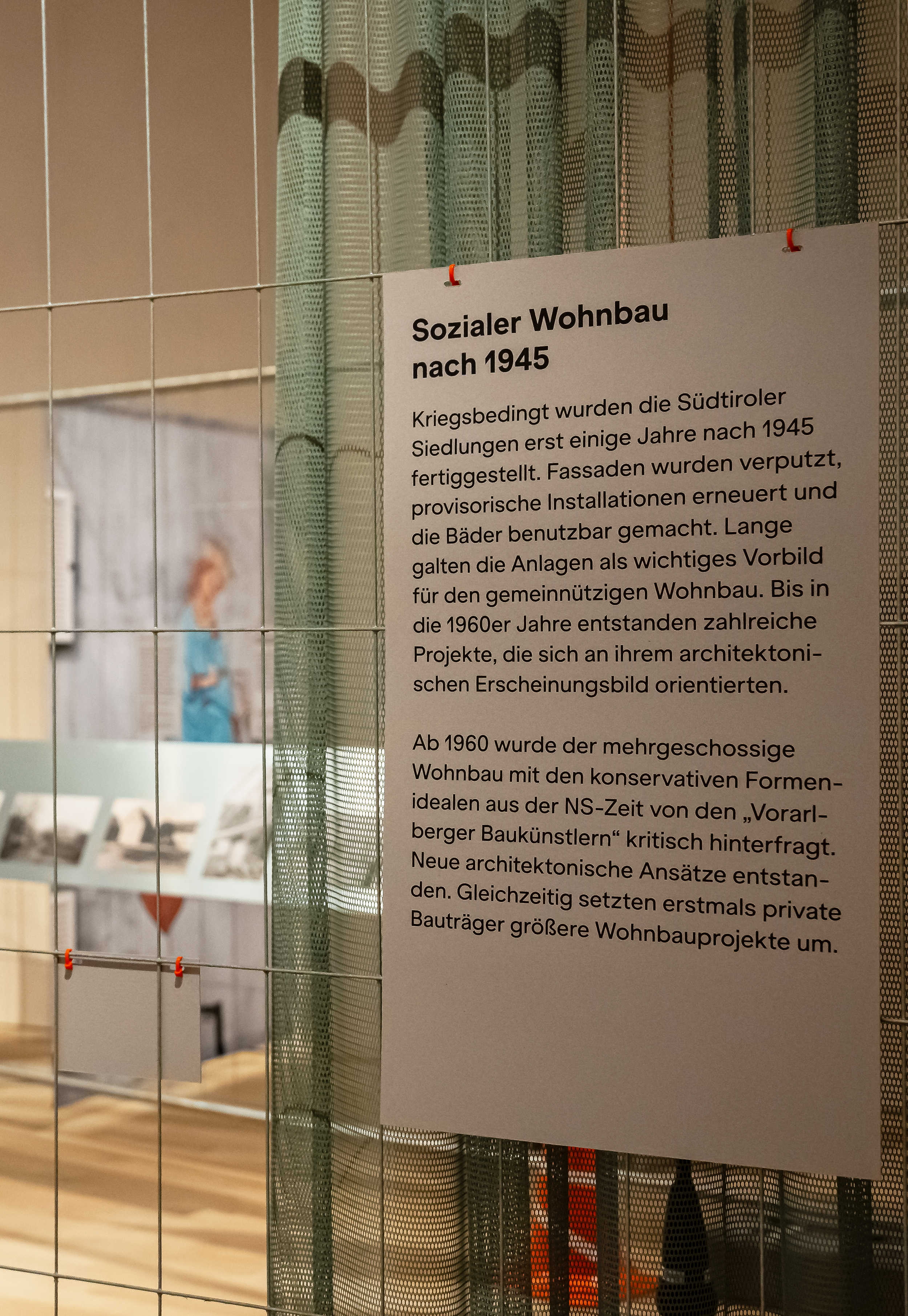
Construction fencing serves as a flexible modular system, allowing us to define building zones and spatial structures. We also work with sharp, striking layout forms that deliberately avoid a sense of comfort and at times create dead ends, while overall generating a highly dynamic spatial arrangement that guides visitors through the exhibition.
Each thematic strand — conceived as a “construction zone” — contains an inner area representing the period before 1945 and an outer area addressing the time after 1945. Visual connections between these two zones encourage visitors to reflect and experience history in a tangible way.
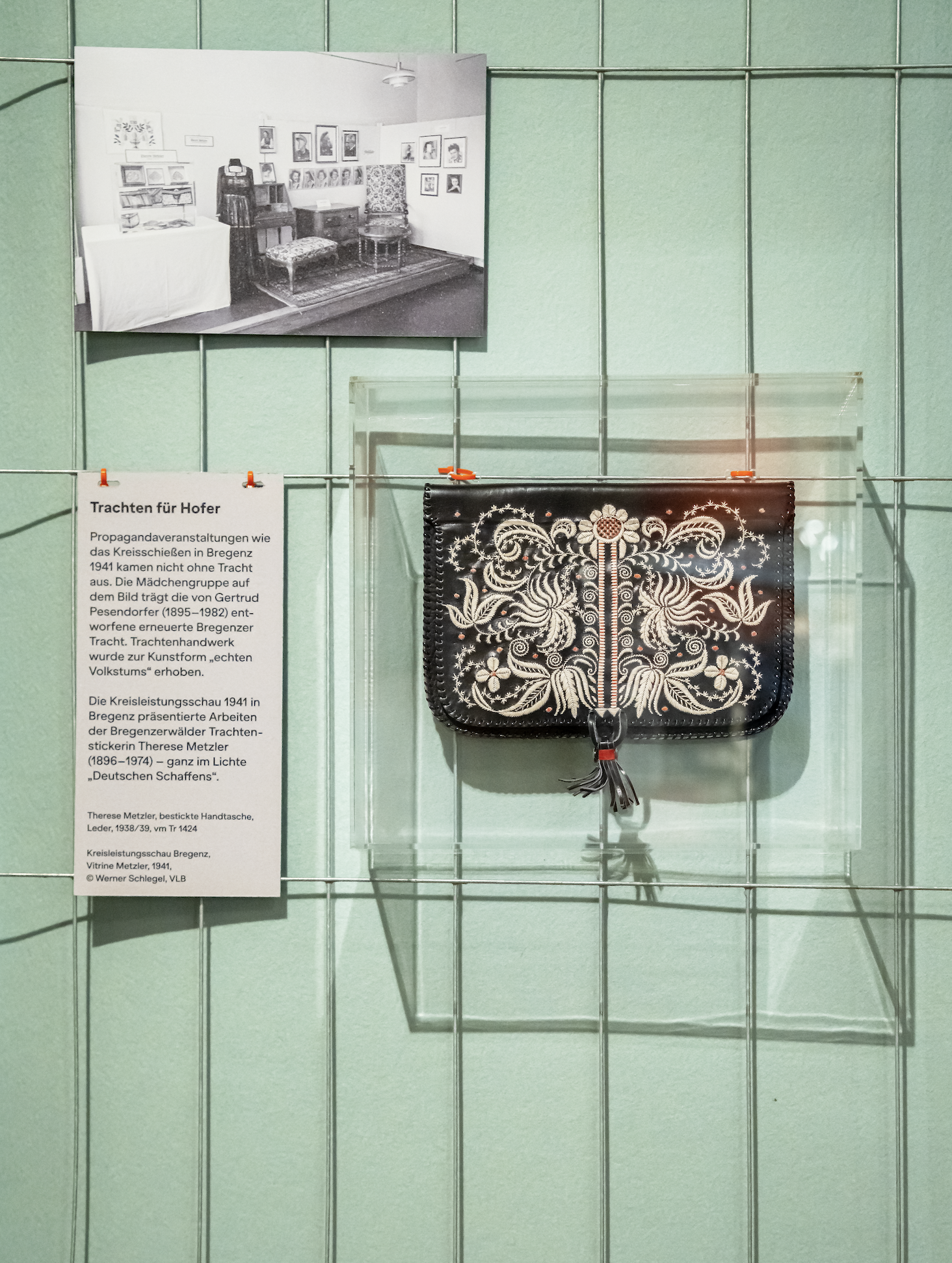
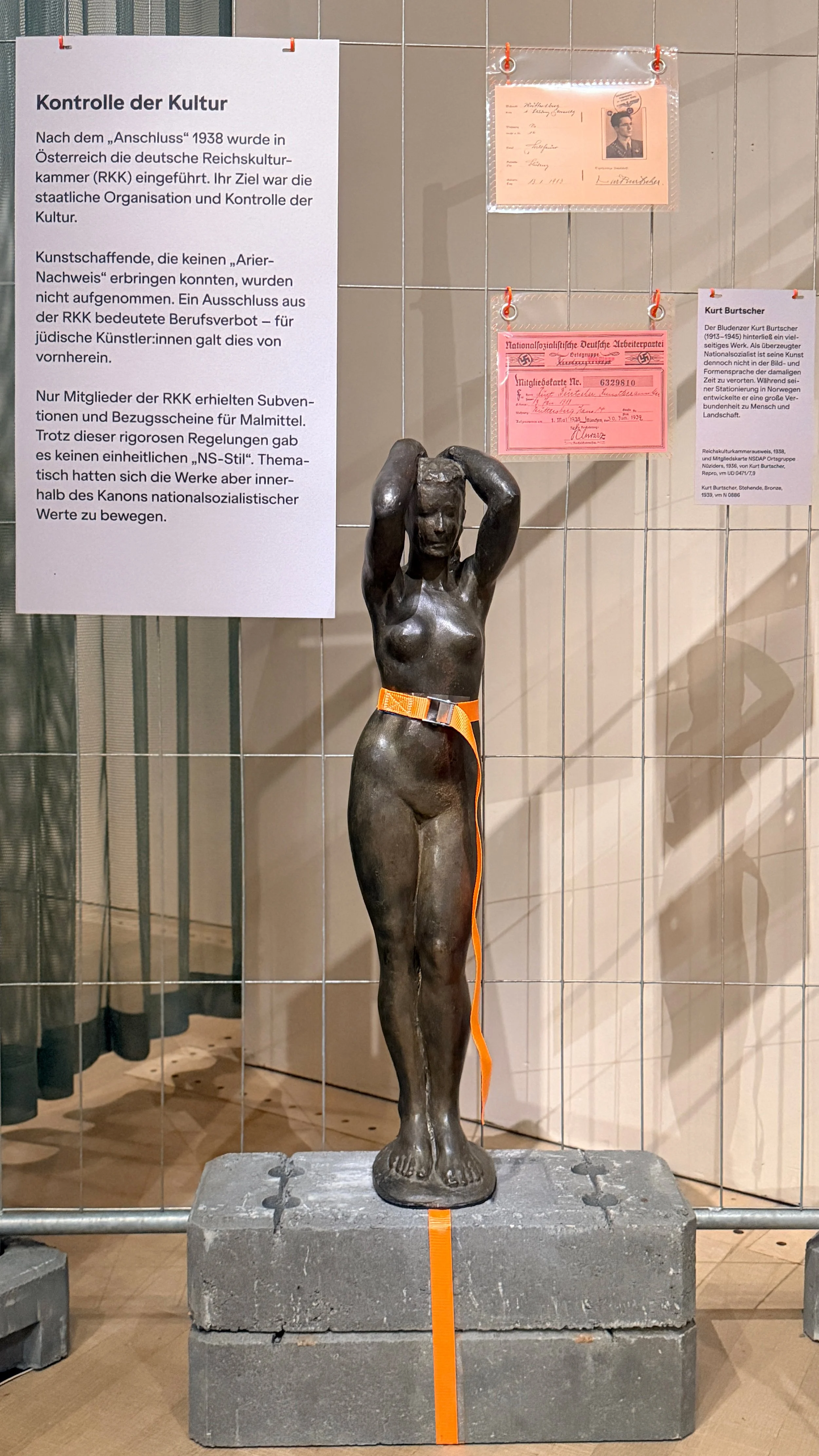
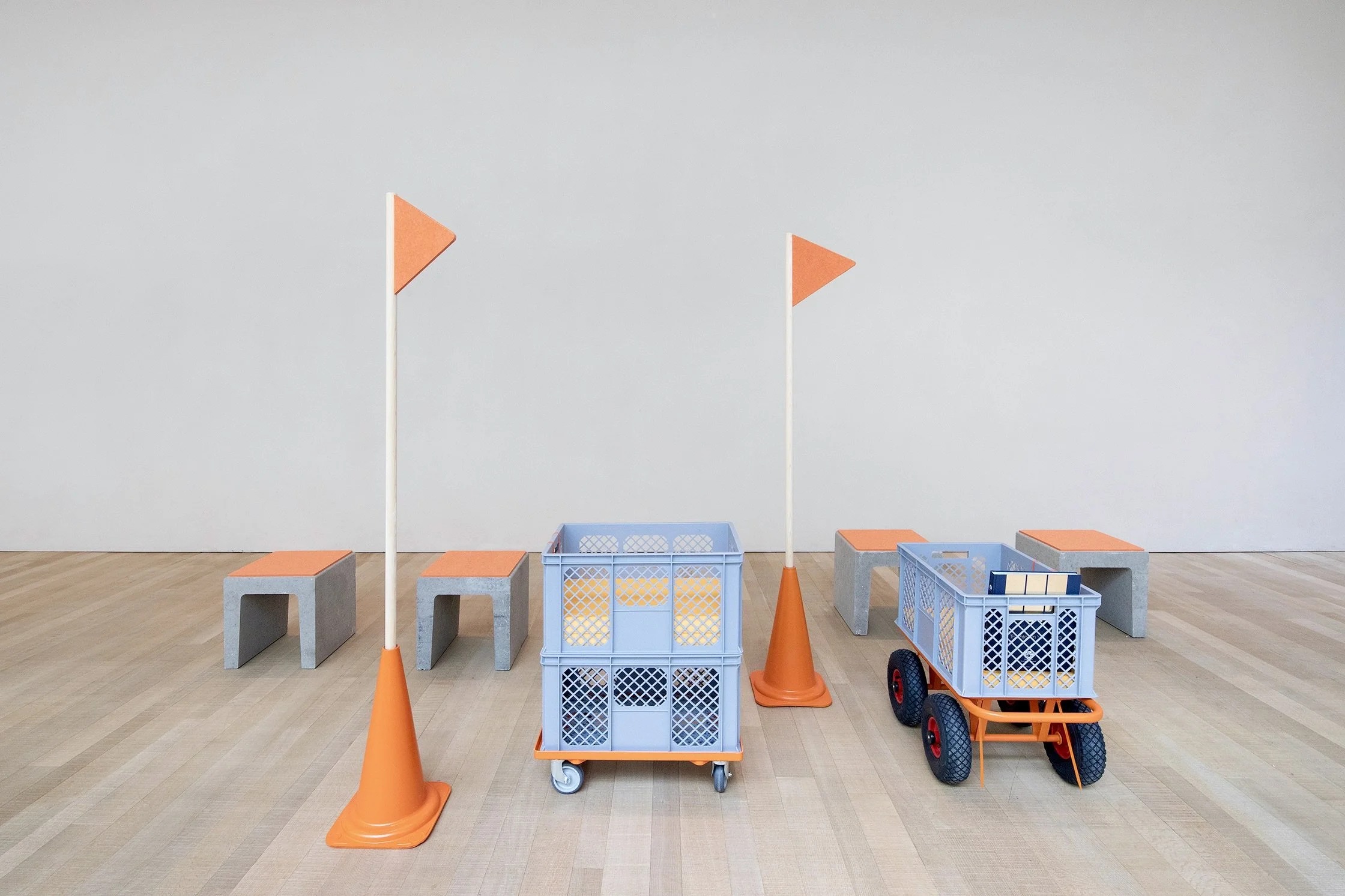
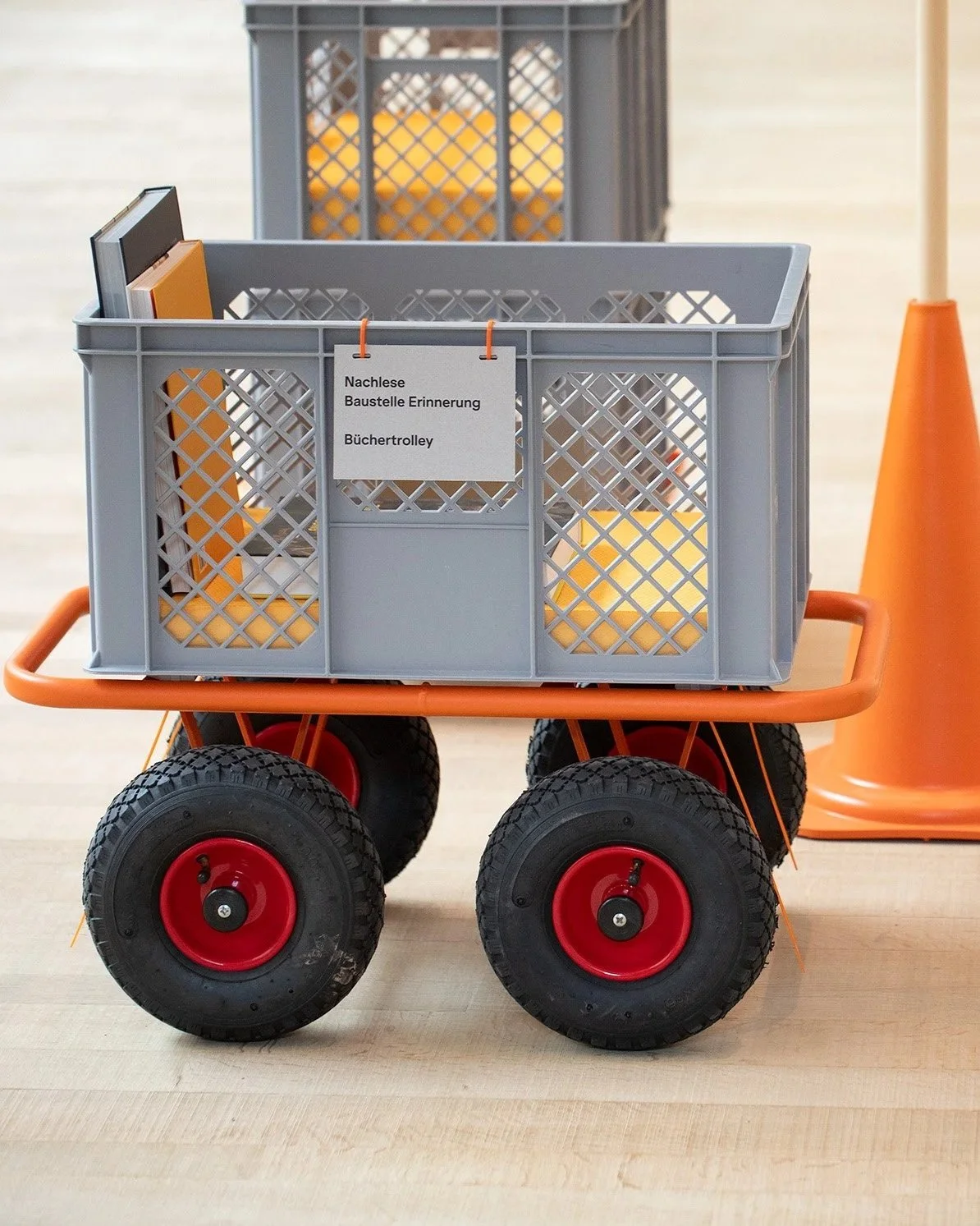
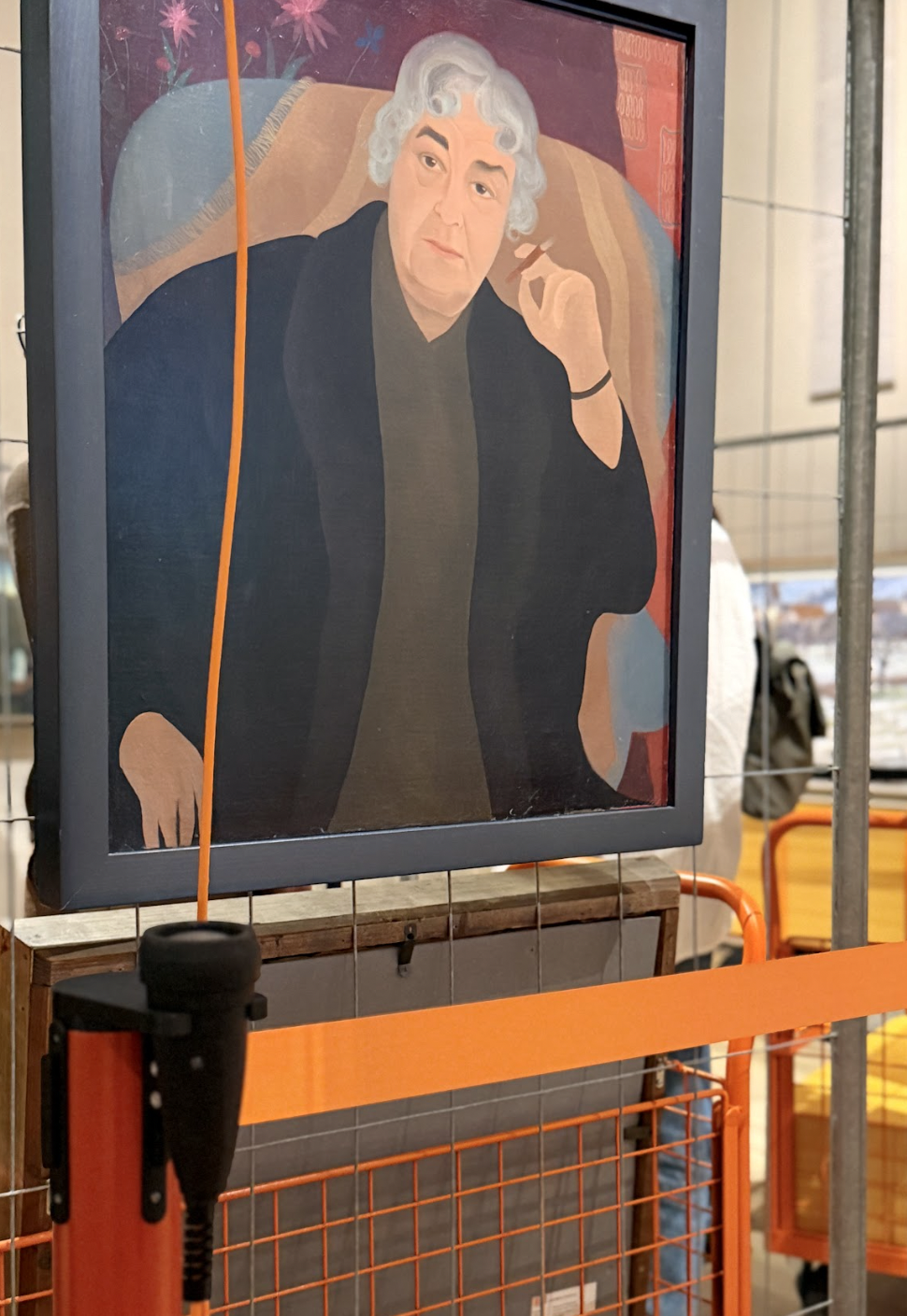
The construction fence elements are combined with standard industrial objects such as various trolleys, corrugated metal sheets, and traffic cones, intentionally emphasising the temporary character of the installation. The trolleys, for example, help avoid an elevated or glorifying presentation of Nazi artworks. The works are displayed lower than typically expected in museums and presented in storage crates. Both the construction fencing and the mobile trolley systems are also part of a sustainability-focused concept: these materials generate minimal waste and can be reused.
“Remembrance – a Work in Progress” invites museum visitors to critically view these objects and start to talk about an alert culture of remembrance.
With the guest contribution “Disposing of Hitler” from the House of Austrian History
Vorarlberg Museum Special Exhibition, Third Floor, 09 Mai 2026 – 29 Aug 2027
Remembrance – a Work in Progress I “Disposing of Hitler”
Working on a burdened legacy
Project Data
Client vorarlberg museum
Year 2026
Location Vorarlberg, Austria
Type Cultural
Curation Theresia Anwander, Felix Wittwer
Guest Contribution House of Austrian History
Design Sabrina Summer
Graphic Nina Sturn
Technical Martin Beck
Build Vorarlberg Museum / Roland Adlassnigg
Project Management Johannes Nussbaumer, Judith Kern
Photography Petra Rainer, vorarlberg museum © Rene Fischer, Nina Sturn